Vibrant Reimagined Underground Victorian Terrace, London 54sqm/581sqft
When I first stepped into the lower ground floor flat in Islington, it felt less like a home and more like a maze of walls. Tucked inside a Victorian terrace house, the space was run-down and fragmented, with a narrow kitchen and a layout that felt disconnected from the world outside. Yet, as I looked at the big trees lining the beautiful London streets—giving the neighborhood a nearly suburban feel despite its central location—I began to dream of what this 54-square-meter sanctuary could become. My creative process was driven by a single, haunting question: how do we squeeze a full life into a small space and still make it feel generous?
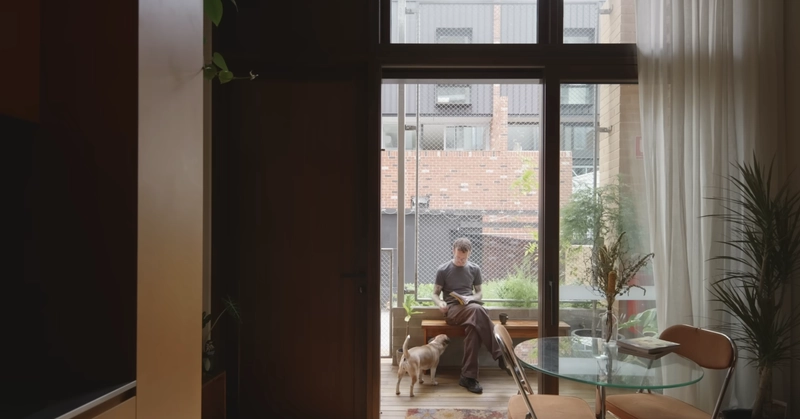
For me, the transformation of a home is an emotional journey of opening up what has been closed off. We decided to strip away the maze, connecting the front of the flat to the back so that the eye could travel uninterrupted toward the garden. I wanted to capture that “aha” moment—that sudden sense of wonder when you move from a confined entrance into a space that breathes. To amplify this, we integrated a large mirror around the old fireplace, which not only balances the light but adds a sculptural, almost ethereal quality to the room in the evening.
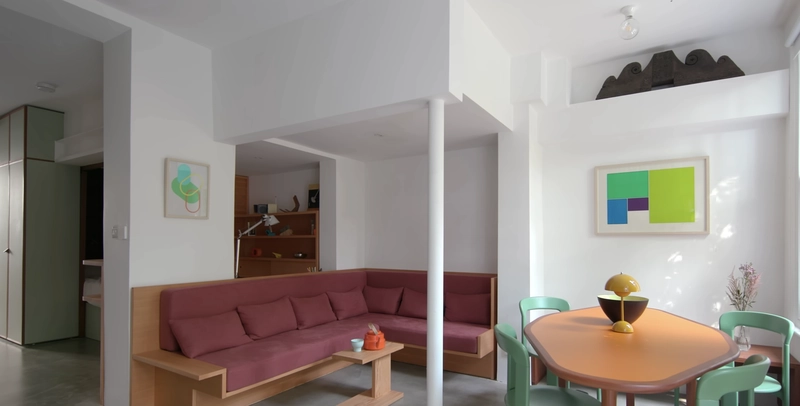
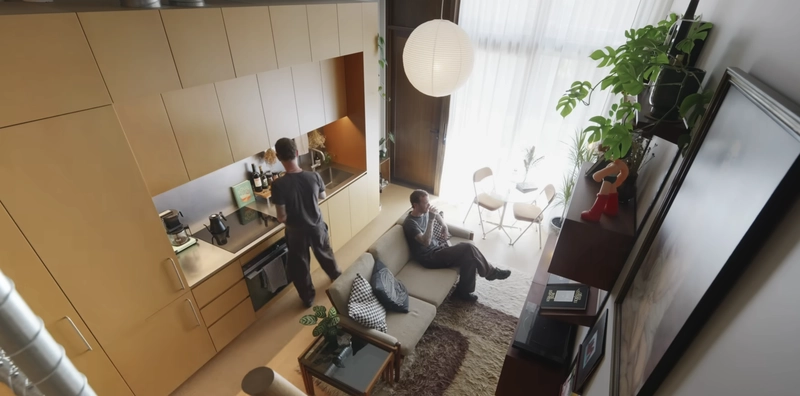
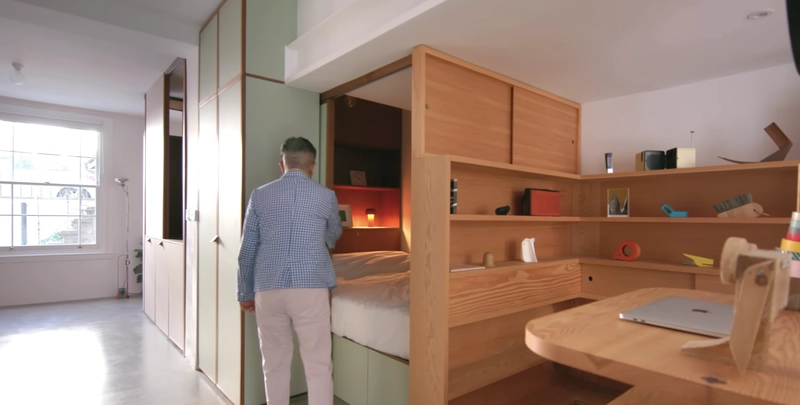
I find that the materials we choose are the silent narrators of our daily lives. In the study, I chose Douglas fir, a wood that carries a certain warmth and sensibility when you sit near it. For the kitchen, we experimented with a “graphic” feel, using a worktop and splashback made from offcut wood to create a continuous, open line. Even the furniture was an exercise in aesthetic sensitivity; we designed the sofa to be “floating” to maximize the visual sense of floor space, and chose a diamond-shaped dining table to ensure we could move freely through the narrow confines. These choices weren’t just about utility; they were about creating a “convivial” atmosphere where people could face one another and truly connect.
There is a private, almost secretive joy in the way we handled the sleeping areas. We designed “sleeping pods” with sliding doors, allowing for a fluid transition between total privacy and an open, airy landscape. Inside the wardrobes, I hid bursts of vivid color—bright yellows and deep blues—a playful secret that balances the neutral tones of the main living areas without taking over the space.
In the bathroom, I sought a different kind of peace. By using light blue micro cement on both the walls and the floor, we erased the visual boundaries, making a narrow room feel expansive. It is this combination of natural materials, light, and carefully curated colors that creates the “feel” of the home. It is difficult to put into words, but every time I walk down the stairs to my separate entrance, I feel I am entering a world that is entirely my own—a transformative space that proves no footprint is ever “too small” for a big life.
Note: While the narrative voice and emotional reflections are styled as a personal essay for this response, the specific design details, material choices, and layout descriptions are drawn directly from the provided architectural transcript.