Small Melbourne Terrace House Designed for Affordable and Sustainable Living, 28sqm/301sqft
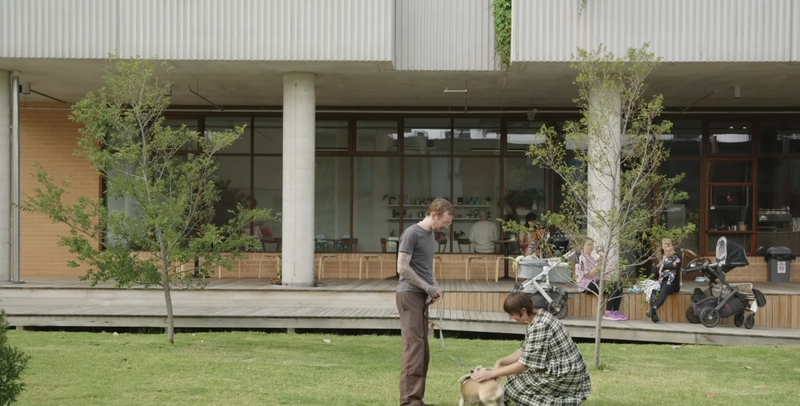
For a long time, the dream of homeownership felt like a door that was permanently locked against my generation. In a “broken system” where housing security often feels like a luxury, I found myself searching for something different—a way to live that was simpler, lighter, and more intentional. My journey led me to a 28-square-meter “Teilhaus” in Melbourne, a German concept meaning “part of a house,” because while my private footprint is small, the rest of my home exists in the vibrant community around me.
The Creative Process of Reductionism
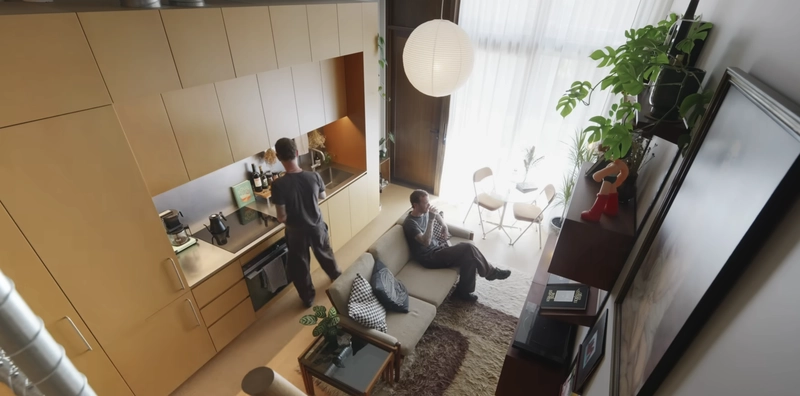
Designing and decorating this space has been an exercise in what my architects call the “architecture of reductionism”. Every choice I made was an attempt to find “poetry in the everyday”. Because the apartment is designed to have half the embodied carbon and operational costs of a standard home, I felt a deep responsibility to ensure my interior choices mirrored that sustainability.
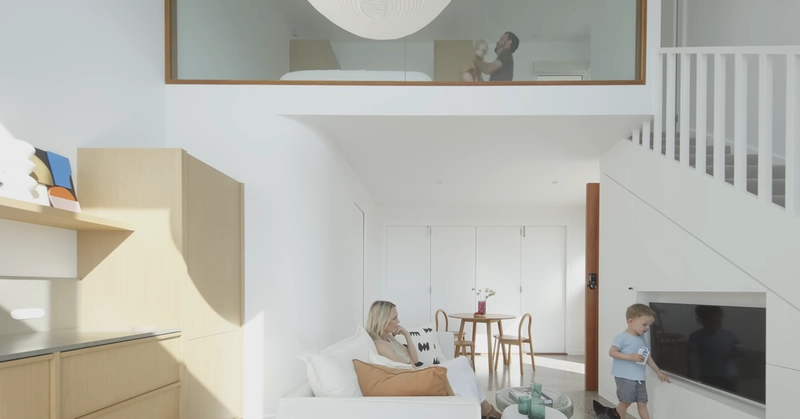
I started from the ground up—literally. The floors are made of pre-finished cork, a material that actually sequesters carbon rather than emitting it. It’s soft underfoot and absorbs the sounds of my daily life, creating a quiet sanctuary. I chose to leave the concrete structure and timber joists exposed; by removing the need for additional ceiling linings, I gained a sense of volume that makes the 4.5-meter-high ceilings feel even more expansive.
Aesthetic Sensitivity in a Small Footprint
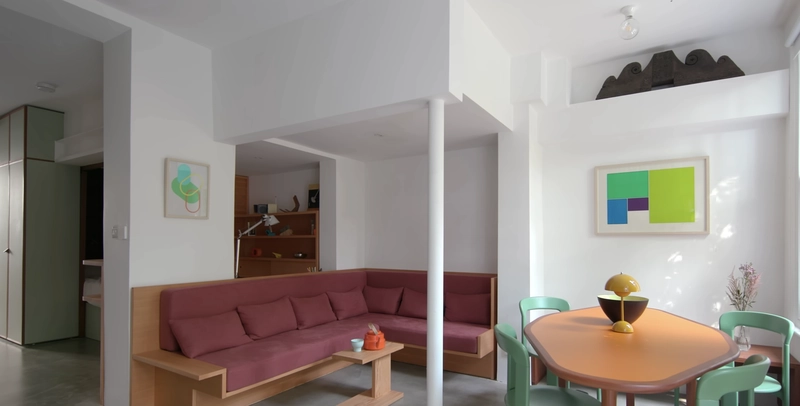
In such a compact space, every object must earn its keep. My creative process involved selecting pieces that enhanced the sense of airiness. I chose a mid-century sideboard that sits on legs, “floating” off the floor to draw the eye upward and keep the floor plan feeling open. To define my living area without building walls, I used a carefully placed rug to frame the space.
My kitchen is a testament to functional beauty. Made of stainless steel and e0 MDF, it is entirely recyclable should it ever need to be replaced. I love the way the light reflects off the steel splashback, which I use as an organizer with magnets and a pot rail to keep my tools within reach.
The Emotional Heart of the Home
The most intimate part of my home is the sleeping loft, reached by a ladder of Victorian hardwood. Up there, I sleep on a low-profile futon to maximize the “lofty” feel of the space. I’ve wrapped the industrial diamond mesh of the loft in Devil’s ivy, watching the vines crawl across the metal to soften the room’s edges with living green.
There is a profound emotional security in knowing my home is 100% electric and powered by renewables, but the connection goes deeper than utility. Through a “pay the rent” scheme, I contribute annually to the traditional owners of this land, acknowledging a history that predates this modern structure.
Living Lighter, Together
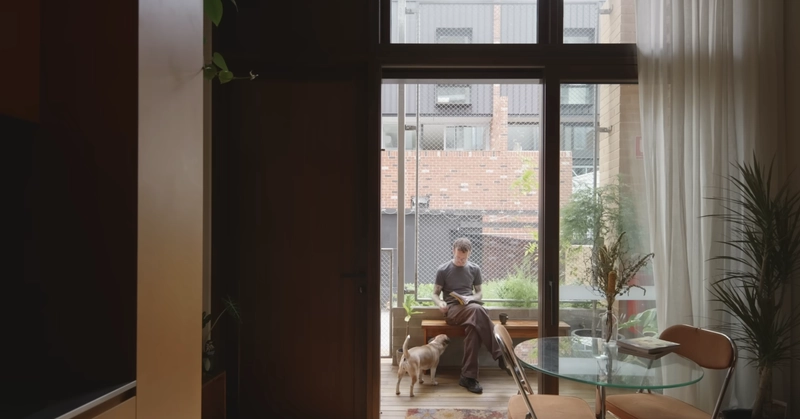
My home doesn’t end at my front door—which, unusually for Australia, opens outward to save space and provide a better thermal seal. Outside, I have a planter box where I’ve started growing climbers to vegetate the building’s facade.
When I need more than my 28 square meters, I head to the rooftop. I spend my evenings in the shared garden beds or the communal bathhouse, where conversations with neighbors flow as easily as the water. This home wasn’t designed to be a “big penthouse” for the few; it was designed to be a gentle and joyful starting point for a life lived with optimism and purpose. In this small space, I have found the room to breathe.