The Architecture of Necessity: Redefining Modern Living through Reduction and Connection
As an architect, I often view our craft not just as the act of building, but as a response to a “broken system” where housing security has become increasingly elusive for a whole generation. Modern living is no longer defined by the accumulation of square footage, but by how intelligently we use the space we have. Projects like the Nightingale Preston in Melbourne exemplify a shift toward a “triple bottom line” housing model: architecture that is simultaneously affordable, sustainable, and community-focused.
Spatial Efficiency and the Sense of Volume
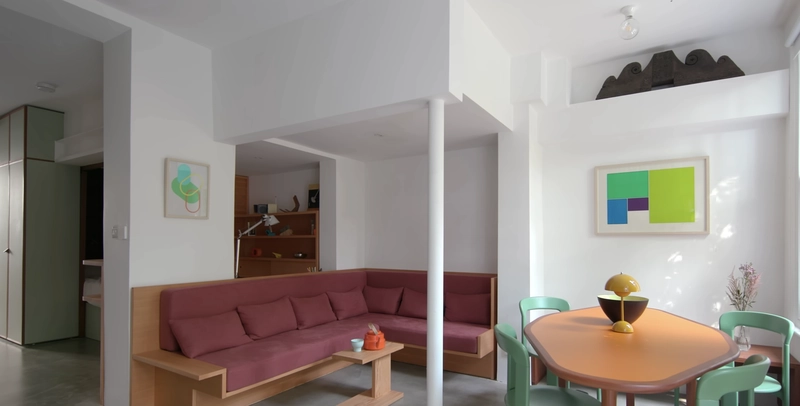
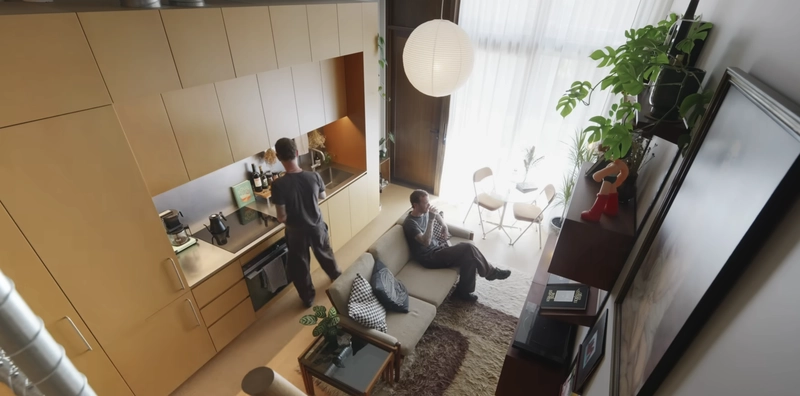
The challenge of modern urban living often manifests in shrinking footprints. However, a small footprint—such as the 28-square-meter “Teilhaus” (part-house)—does not have to mean a small life. By utilizing an architecture of reductionism, we can strip away unnecessary elements like ceiling linings to expose structural concrete, which increases the internal volume and height.
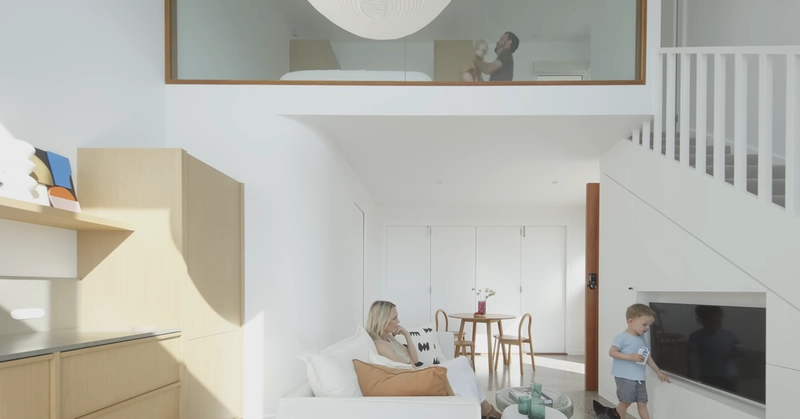
In these compact spaces, spatial efficiency is achieved through verticality and multifunctional design. A 4.5-meter ceiling height provides a sense of grandeur, while a sleeping loft allows the ground floor to remain dedicated to living and working. We also employ visual cues to enhance the perception of space; for instance, “floating” furniture and cabinetry that do not touch the ground draw the eye upward and keep the floor plane clear. Every centimeter is curated, from full-height pantries to integrated desks surrounded by storage to ensure functionality is never sacrificed for size.
Sustainable Materials and Thermal Integrity
Our choice of materials is the primary tool for addressing the climate crisis. The goal is to design buildings with half the embodied carbon and half the operational carbon of standard developments. To achieve this, we prioritize highly sustainable materials such as pre-finished cork, which acts as a carbon sequester rather than an emitter while providing acoustic benefits.
Furthermore, a building’s lifecycle must be considered. Using materials like stainless steel and E0 MDF in kitchens allows for future recycling should the space be renovated. Beyond the materials themselves, the “active” sustainability of a home is paramount. Modern architecture must move toward being 100% electric and powered by renewables, utilizing thermal efficiency and hydronic heating to eliminate the need for traditional air conditioning.
Architecture, Nature, and the Shared Experience
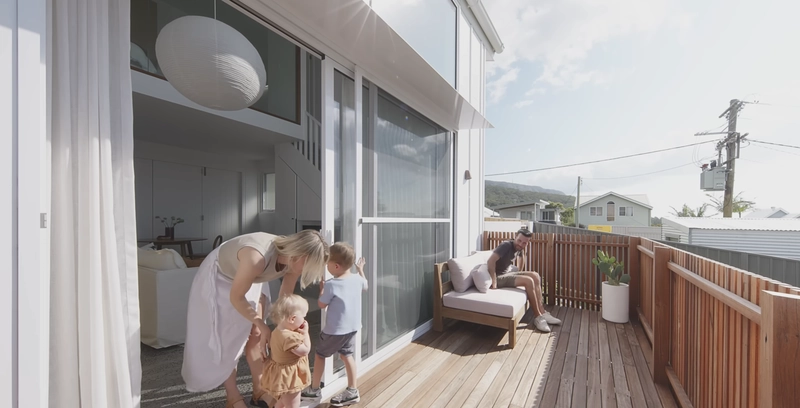
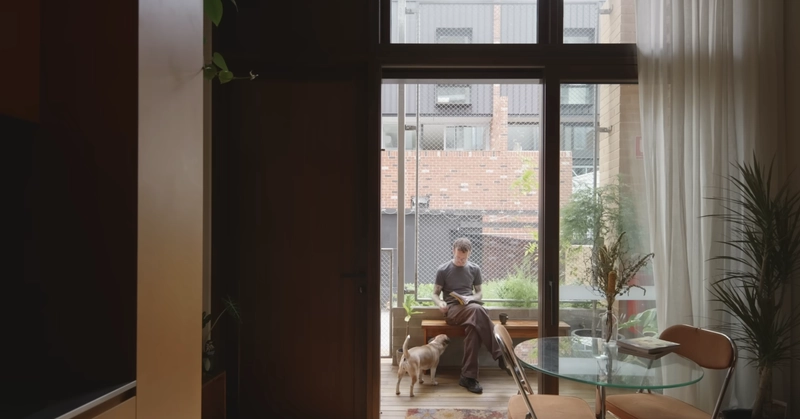
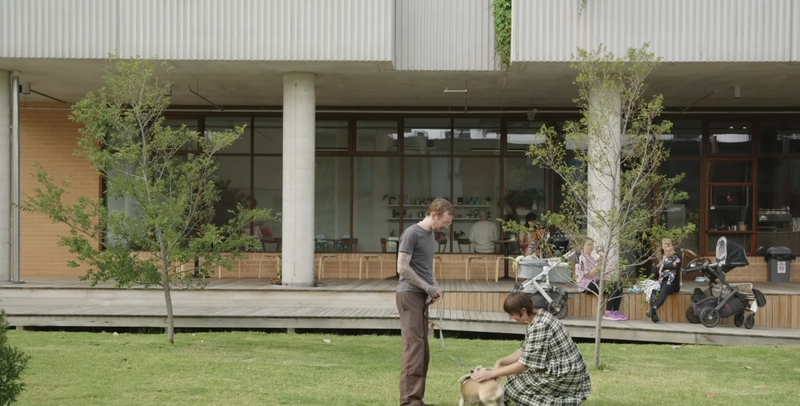
Architecture influences modern living by blurring the lines between the private interior and the natural world. In a dense urban context, we provide vegetated facades where climbing plants grow on industrial mesh, and every resident is provided with a planter box and a tap to treat their deck as an extension of their living space.
True modern living also recognizes that we cannot exist in isolation. The “Teilhaus” concept suggests that while your private footprint is small, the “rest of the house” exists in the shared amenities. Architecture fosters community through:
• Shared rooftop gardens for growing vegetables.
• Communal bathhouses and dining areas that encourage social interaction.
• Productive facades that bring greenery into the daily lives of residents.
Ultimately, this approach to architecture is an attempt to drive positive change in a tough economic climate. By focusing on living lighter, finding “poetry in the everyday,” and prioritizing the environment, we can offer a starting point for a more sustainable and connected way of life.