The New Urban Compact: How the “Teilhaus” is Redefining Home
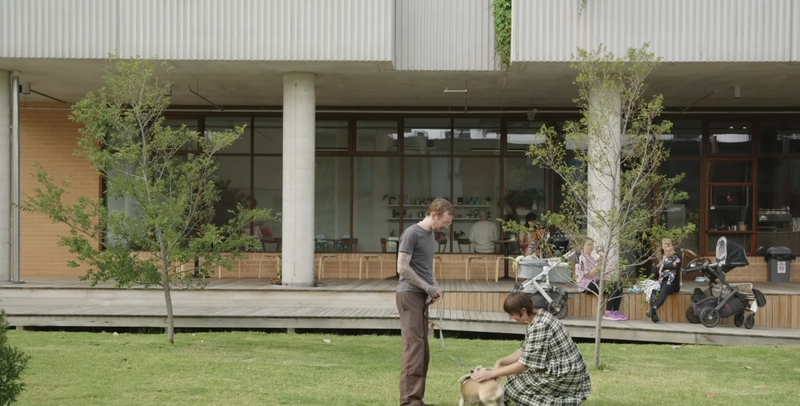
In the heart of Preston, just seven kilometers north of Melbourne’s bustling center, a new architectural experiment is challenging the traditional Australian dream of sprawling suburban yards and oversized floor plans. As a generation finds itself increasingly “locked out of housing security” due to a “broken system” and a “tough economic climate,” designers are looking toward a more compact, communal, and sustainable future.
At the center of this shift is Nightingale Preston, a 55-apartment complex developed by a non-profit entity that prioritizes a “triple bottom line”: housing that is simultaneously affordable, sustainable, and community-focused.
The “Part of a House” Philosophy
The most striking feature of this development is the “Teilhaus”—a German term meaning “part of house”. These apartments occupy a mere 28-square-meter footprint, effectively making them half the size of a standard one-bedroom unit. However, Jeremy McLoud, design director and co-founder of Breathe Architecture and Nightingale Housing, explains that the small footprint is deceptive. The concept relies on the idea that “the rest of the house exists everywhere else in the building”.
Instead of private, massive penthouses for a few, the building’s rooftop is dedicated to shared amenities. Residents have access to a communal laundry, additional storage, a dining area for functions, and shared rooftop garden beds managed by a gardening committee. Perhaps most uniquely, the building features a shared bathhouse, where neighbors can socialize while their children play.
Sustainable by Design
The shift toward smaller living is driven as much by environmental necessity as by economics. The Teilhaus is designed to have half the embodied carbon, half the operational carbon, and ideally, half the bills of a standard apartment.
The building is 100% electric, powered by 100% renewables, and is thermally efficient enough to function without air conditioning. McLoud describes their approach as an “architecture of reductionism,” where unnecessary elements like ceiling linings are removed to expose the structure, providing extra volume and height within the small spaces. Even the flooring choice is intentional; pre-finished cork is used because it acts as a carbon sequester rather than an emitter, while also absorbing sound.
Life Inside 28 Square Meters
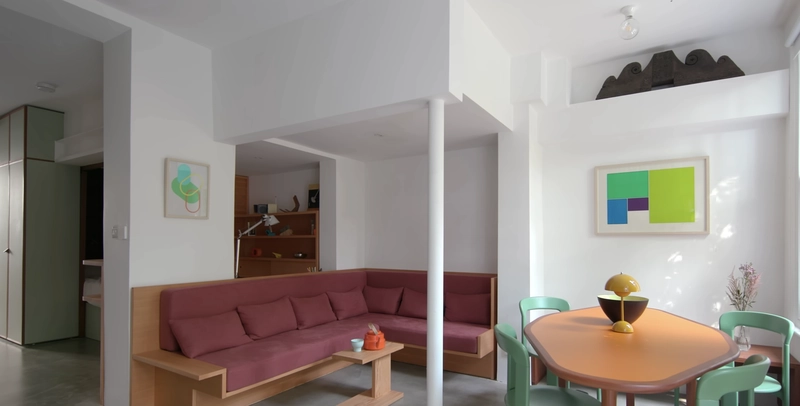
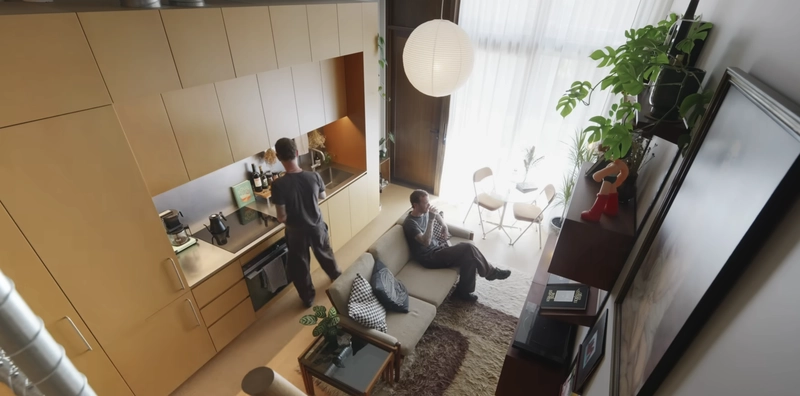
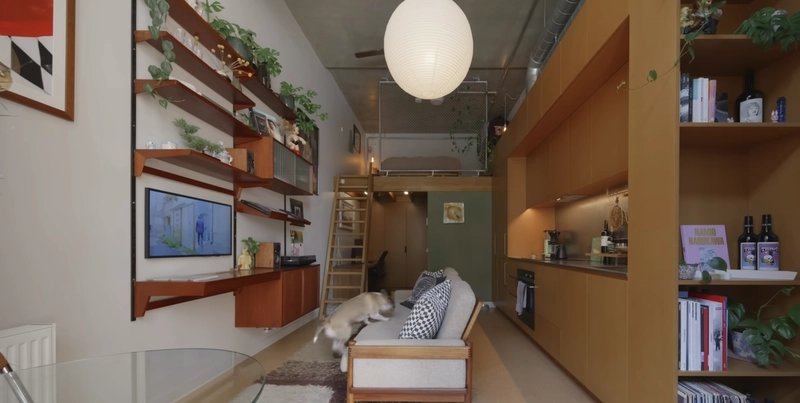
Inside one such Teilhaus belonging to a resident named Jam, the design focuses on functionality and volume. Despite the small footprint, the ceiling reaches a height of 4.5 meters, creating a sense of spaciousness.
The layout is a masterclass in spatial efficiency:
• The Kitchen: Features full-size appliances, including a four-burner induction cooktop and an integrated fridge, elevated off the ground to “float” and make the room feel larger.
• The Loft: A sleeping area accessed by a Victorian hardwood ladder, enclosed with industrial diamond mesh that serves as a trellis for indoor plants.
• Multi-functional Spaces: The area under the loft is used by Jam as a generous double-desk study, though it was designed to be adaptable to various needs.
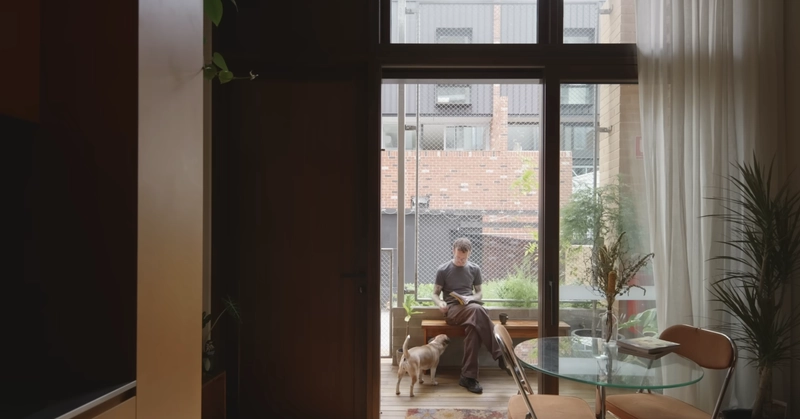
“We provide a planter box and a tap” for every unit, McLoud notes, allowing residents to treat their decks as an extension of their living space—a place to wash boots or pursue hobbies.
A New Social Contract
Beyond the physical structure, Nightingale Preston acknowledges its social footprint. The project was sold at cost, a rarity in a market dominated by for-profit developers. Furthermore, the community participates in a “pay the rent” scheme, where residents pay an annual sum to the traditional owners of the land in recognition that the territory was never ceded.
While McLoud admits that this form of hyper-compact living “is not for everyone,” he argues it is a necessary alternative in a “very tough economic climate”. For the young professionals and “sloths” looking to slow down and live lighter in the city, the Teilhaus offers more than just a roof; it offers a starting point for a different kind of urban life—one that finds “poetry in the everyday” through simplicity and shared experience.